
Intro
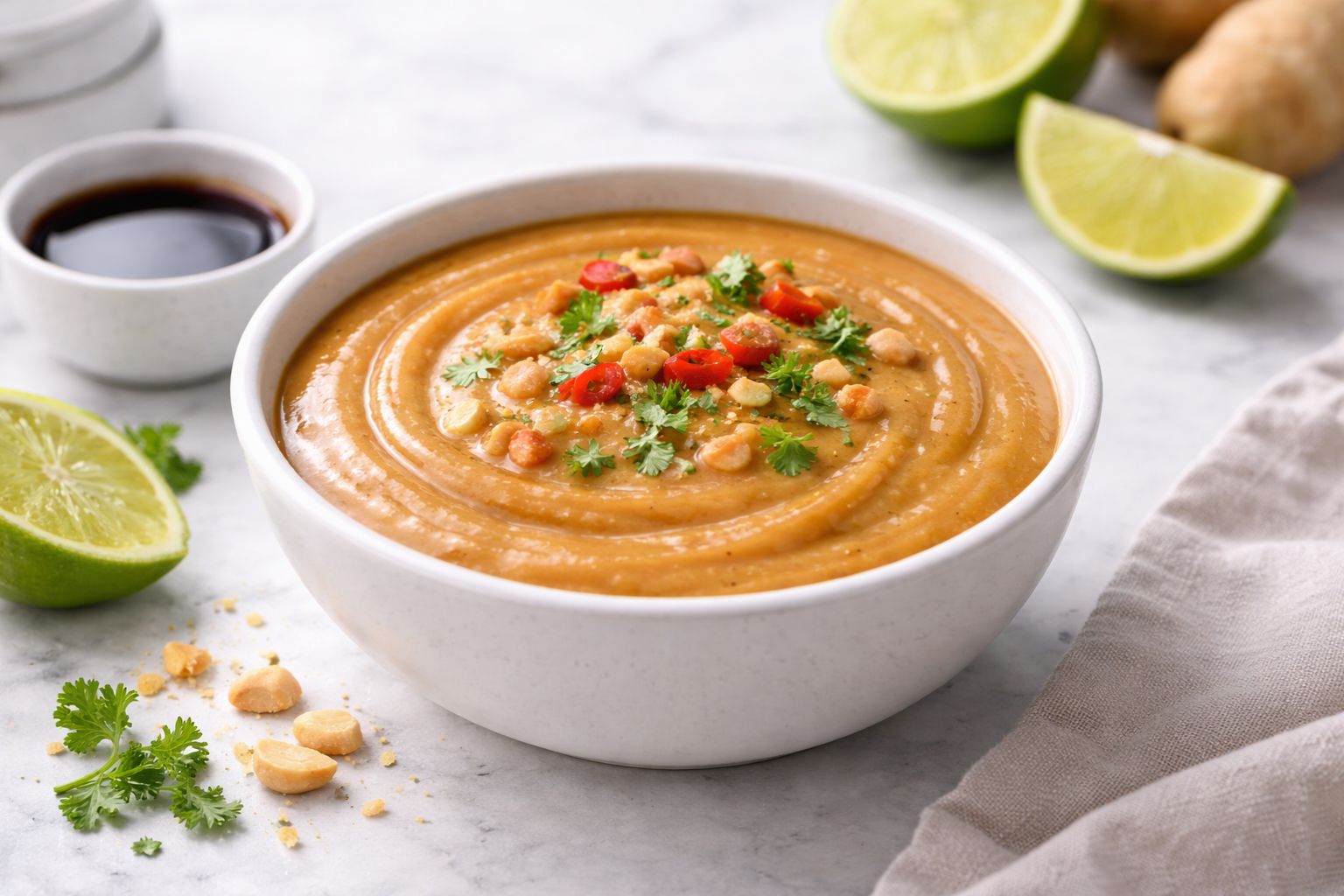
There are some recipes that quietly become heroes in your kitchen. They are not loud or fancy, but once you make them, you start using them on everything. That is exactly how I feel about this Thai Peanut Sauce Recipe.
The first time I made it, I was simply trying to recreate a dipping sauce I had tasted at a small Thai restaurant. I remember dipping a fresh spring roll into that creamy, nutty sauce and thinking, how can something so simple taste so deep and complex?
As a home cook who loves bold flavors, I was determined to get it right in my own kitchen. I played with peanut butter, soy sauce, fresh garlic, lime juice, and just the right touch of brown sugar. After a few tries, I found the balance. Creamy, salty, sweet, tangy, and just a little spicy. Since then, this sauce has become a staple in my home.
This Thai Peanut Sauce Recipe is incredibly versatile. You can drizzle it over noodles, use it as a dip for chicken skewers, spoon it over rice bowls, or even spread it inside wraps. It comes together in minutes, uses simple pantry ingredients, and tastes like something you would order at your favorite Thai restaurant.
If you love rich peanut flavor with a bright kick of lime and a gentle heat from chili, you are going to fall in love with this sauce.
What is Thai Peanut Sauce Recipe?
Thai peanut sauce is a creamy, savory sauce made primarily from peanut butter combined with ingredients like soy sauce, lime juice, garlic, sweetener, and chili. In Thai cuisine, peanut-based sauces are often served alongside satay (grilled skewers), fresh spring rolls, or noodle dishes.
What makes this sauce special is its balance. The peanut butter gives it a rich, nutty base. Soy sauce adds saltiness and depth. Fresh lime juice brings brightness. Brown sugar or honey gives sweetness. Garlic adds sharpness. A touch of red chili flakes or sriracha gives gentle heat.
In this Thai Peanut Sauce Recipe, everything works together beautifully. It is thick yet pourable, creamy but lightened by citrus, and bold without being overpowering.
Equipment List
You do not need anything fancy to make this sauce. That is one reason I love it.
- Medium mixing bowl
- Whisk
- Measuring cups and spoons
- Garlic press or knife
- Small saucepan (optional, if warming)
- Airtight jar or container for storage
If you prefer an ultra-smooth texture, you can also use a small blender or food processor. But honestly, a whisk works perfectly well.
Recipe Card Info
Prep Time: 10 minutes
Cook Time: 5 minutes
Total Time: 15 minutes
Serves: 8 servings (about 1 1/2 cups sauce)
Cuisine: Thai-inspired
Course: Sauce
Calories: 180 calories per serving (2 tablespoons)
Ingredients
- 1 cup creamy peanut butter (natural or regular)
- 2 tablespoons soy sauce
- 1 tablespoon rice vinegar
- 2 tablespoons fresh lime juice
- 1 tablespoon brown sugar (or honey)
- 1 teaspoon freshly grated ginger
- 2 cloves garlic, minced
- 1 to 2 teaspoons sriracha (adjust to taste)
- 1/2 cup warm water (more as needed)
- 1 tablespoon sesame oil
Optional garnish:
- Crushed peanuts
- Chopped fresh cilantro
- Extra lime wedges
Each ingredient plays a role. Peanut butter forms the creamy base. Soy sauce and sesame oil add savory depth. Lime juice and rice vinegar bring acidity. Brown sugar softens the sharp edges. Garlic and ginger create warmth. Sriracha gives gentle heat.
Instructions (Step by Step)
Step 1: Combine the Base
In a medium bowl, add the peanut butter, soy sauce, rice vinegar, lime juice, brown sugar, sesame oil, grated ginger, minced garlic, and sriracha.
Step 2: Whisk Until Smooth
Use a whisk to combine everything. At first, the mixture will look thick and slightly clumpy. Keep whisking. It will begin to smooth out.
Step 3: Add Warm Water
Slowly add warm water, a few tablespoons at a time, whisking continuously. This helps loosen the sauce and make it silky. Continue until you reach your desired consistency. For dipping, keep it thicker. For drizzling over noodles, thin it slightly more.
Step 4: Taste and Adjust
This is my favorite step. Taste the sauce and adjust. Need more salt? Add a splash of soy sauce. Want more tang? Add more lime juice. Prefer sweeter? Add a little extra brown sugar. Like it spicy? Add more sriracha.
Step 5: Optional Gentle Heat
If you prefer a slightly warmed sauce, transfer it to a small saucepan and heat gently over low heat for 2–3 minutes, stirring constantly. Do not boil.
Your Thai Peanut Sauce Recipe is ready to use.
Flavor and Texture Experience
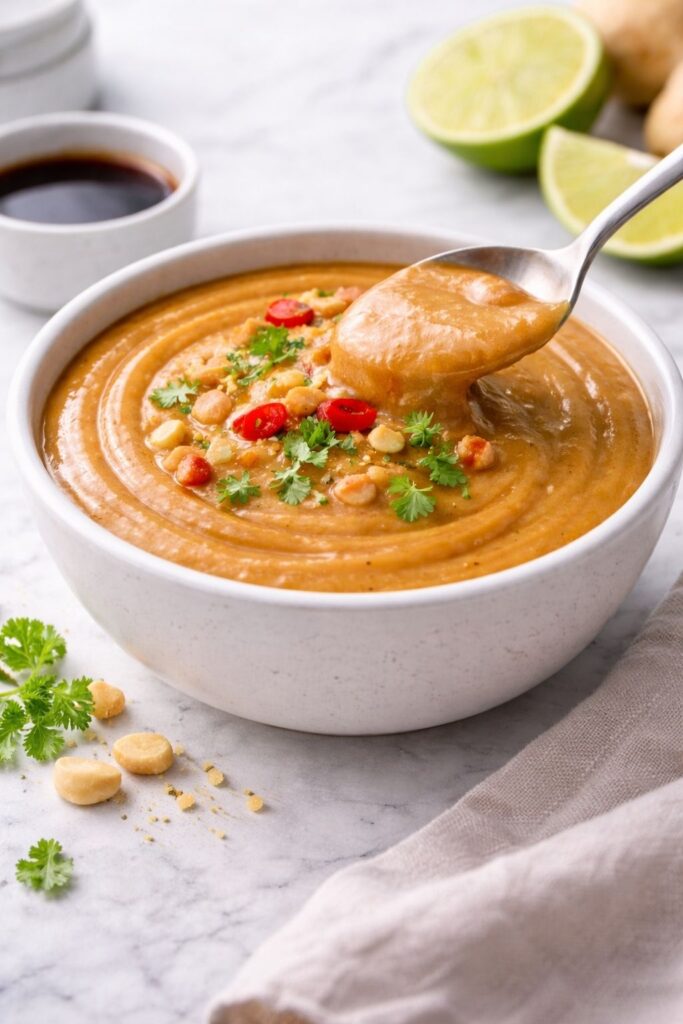
The first thing you notice is the creamy richness of the peanut butter. It coats your tongue in the best way. Then comes the saltiness from the soy sauce, followed by a bright pop of lime. The ginger and garlic gently bloom in the background, adding warmth and depth.
The texture is smooth and velvety. When thinned slightly, it pours beautifully over noodles or grilled chicken. When kept thicker, it clings perfectly to fresh vegetables and spring rolls.
Every bite feels layered. Sweet, salty, tangy, nutty, and a little spicy. It is comfort and excitement all at once.
My Personal Tips for the Best Peanut Sauce
After making this countless times, I have learned a few things:
- Use fresh lime juice, not bottled.
- Warm water blends better than cold water.
- Natural peanut butter works beautifully, but stir it well first.
- Always taste before serving.
Cooking is about balance. Trust your palate.
Delicious Ways to Use Thai Peanut Sauce Recipe
This sauce is so versatile that I sometimes make a double batch.
1. With Chicken Satay
Brush grilled chicken skewers with the sauce or serve it on the side for dipping.
2. Over Noodles
Toss warm rice noodles with shredded carrots, cabbage, and a generous drizzle of the sauce.
3. As a Dip
Serve with fresh cucumber sticks, bell pepper strips, or spring rolls.
4. In Rice Bowls
Layer jasmine rice, grilled tofu or chicken, shredded vegetables, and spoon the sauce over everything.
5. As a Salad Dressing
Thin it slightly and pour over crunchy cabbage slaw.
Once you start using this Thai Peanut Sauce Recipe, you will find endless ways to enjoy it.
Variations You Can Try
Spicy Version
Add extra sriracha or a pinch of red chili flakes.
Coconut Twist
Replace part of the water with coconut milk for a richer flavor.
Extra Tangy
Add an extra splash of rice vinegar.
Gluten-Free Option
Use tamari instead of regular soy sauce.
Small changes can create new flavor profiles.
Make-Ahead and Storage Tips
Store the sauce in an airtight container in the refrigerator for up to 7 days.
It will thicken as it chills. Simply stir in a little warm water before serving to loosen it.
I often prepare this Thai Peanut Sauce Recipe ahead of time for meal prep. It saves so much time during busy weekdays.
Nutritional Benefits
Peanut butter provides protein and healthy fats. Ginger and garlic offer natural antioxidants. Lime juice contains vitamin C. When used in moderation, this sauce can be part of a balanced meal.
Because it is rich, a little goes a long way.
Common Mistakes to Avoid
- Adding too much water at once.
- Skipping the tasting step.
- Overheating the sauce.
- Forgetting the acid balance from lime.
Take your time and adjust gradually.
Frequently Asked Questions
Can I freeze peanut sauce?
Yes, but the texture may change slightly. Stir well after thawing.
Can I make it vegan?
It already is vegan if you use sugar instead of honey.
Can I make it nut-free?
You can try sunflower seed butter, though the flavor will differ.
Why This Recipe Works
This Thai Peanut Sauce Recipe works because it respects balance. Thai-inspired cooking is about harmony. Sweet and salty. Sour and spicy. Rich and bright. Each ingredient has a purpose.
The peanut butter gives body. The lime cuts through richness. The soy sauce grounds everything. Ginger and garlic lift the aroma. Sesame oil adds a subtle toasted note.
It is simple, yet it tastes complex.
Final Thoughts
As a woman who finds joy in feeding people she loves, I treasure recipes like this. They are quick, dependable, and full of personality. This Thai Peanut Sauce Recipe is one of those kitchen staples that feels special every time.
Whether you drizzle it over noodles, dip fresh vegetables into it, or spoon it over grilled chicken, it brings bold flavor to the table. It transforms simple ingredients into something exciting.
I hope this sauce becomes a favorite in your home the way it has in mine. Once you taste that creamy peanut base balanced with bright lime and warm ginger, you will understand why I keep coming back to it again and again.
Thai Peanut Sauce Recipe

Equipment
- Medium mixing bowl
- Whisk
- Measuring cups and spoons.
- Garlic press or knife
- Small saucepan (optional, if warming)
- Airtight jar or container for storage
Ingredients
- 1 cup creamy peanut butter natural or regular
- 2 tablespoons soy sauce
- 1 tablespoon rice vinegar
- 2 tablespoons fresh lime juice
- 1 tablespoon brown sugar or honey
- 1 teaspoon freshly grated ginger
- 2 cloves garlic minced
- 1 to 2 teaspoons sriracha adjust to taste
- 1/2 cup warm water more as needed
- 1 tablespoon sesame oil
Optional garnish:
- Crushed peanuts
- Chopped fresh cilantro
- Extra lime wedges
Instructions
Step 1: Combine the Base
- In a medium bowl, add the peanut butter, soy sauce, rice vinegar, lime juice, brown sugar, sesame oil, grated ginger, minced garlic, and sriracha.
Step 2: Whisk Until Smooth
- Use a whisk to combine everything. At first, the mixture will look thick and slightly clumpy. Keep whisking. It will begin to smooth out.
Step 3: Add Warm Water
- Slowly add warm water, a few tablespoons at a time, whisking continuously. This helps loosen the sauce and make it silky. Continue until you reach your desired consistency. For dipping, keep it thicker. For drizzling over noodles, thin it slightly more.
Step 4: Taste and Adjust
- This is my favorite step. Taste the sauce and adjust. Need more salt? Add a splash of soy sauce. Want more tang? Add more lime juice. Prefer sweeter? Add a little extra brown sugar. Like it spicy? Add more sriracha.
Step 5: Optional Gentle Heat
- If you prefer a slightly warmed sauce, transfer it to a small saucepan and heat gently over low heat for 2–3 minutes, stirring constantly. Do not boil.
- Your Thai Peanut Sauce Recipe is ready to use.
Notes
- Use fresh lime juice, not bottled.
- Warm water blends better than cold water.
- Natural peanut butter works beautifully, but stir it well first.
- Always taste before serving.
Hi, I’m Olivia Brooks! Cooking is my passion, and I love turning everyday ingredients into meals that bring joy to the table. On CulinaryPearl, I share simple recipes, helpful kitchen tips, and inspiration for food lovers everywhere