

Intro
There are certain mornings when I wake up already tasting breakfast in my imagination. The kitchen is still quiet, the sunlight barely slipping through the curtains, and I pad across the cool floor in my slippers, already reaching for a skillet.
On mornings like that, I crave something warm, protein-rich, and comforting—but still elegant. That’s when I make my beloved Creamy Cottage Cheese Scrambled.
The first time I made Creamy Cottage Cheese Scrambled, it wasn’t planned. I had fresh farm eggs sitting in a bowl on the counter and a half-used container of cottage cheese in the fridge that needed love.
As a chef, I’m trained to see ingredients not as leftovers—but as opportunities. I whisked them together almost absentmindedly, melted butter in a pan, and hoped for the best.
What happened next was pure kitchen magic.
The eggs transformed into soft, velvety folds with creamy pockets tucked inside. The aroma was buttery and comforting, with just the faintest tang rising from the cottage cheese as it warmed. I took one bite straight from the pan (chef’s privilege), and I actually laughed out loud. It was silky. Rich. Tender beyond belief.
Since then, this easy Creamy Cottage Cheese Scrambled recipe has become one of my most cherished breakfast rituals. It’s nourishing, deeply satisfying, and somehow feels both rustic and refined at the same time.
Let me show you why this simple dish deserves a permanent place in your kitchen.
What is Creamy Cottage Cheese Scrambled?
At its heart, Creamy Cottage Cheese Scrambled is a twist on traditional scrambled eggs—where cottage cheese is folded directly into the egg mixture before cooking.
But describing it that way doesn’t quite capture what makes it special.
When cottage cheese melts gently into eggs over low heat, it creates a luxurious texture that’s almost custard-like. The tiny curds soften and blend into the eggs, leaving behind creamy pockets that feel indulgent without being heavy. The flavor is mild and slightly tangy, perfectly balanced by butter and a touch of salt.
Unlike standard scrambled eggs, which can easily become dry or rubbery if overcooked, this version stays tender and moist thanks to the natural creaminess of the cottage cheese.
I often call it the “quietly luxurious” breakfast—because it doesn’t look flashy, but one bite tells the whole story.
It’s comforting like something your grandmother might make, yet refined enough to serve at a brunch table with linen napkins and fresh flowers.
Why This Dish Means So Much to Me
As a female chef, I’ve spent years perfecting complicated techniques—hollandaise emulsions, soufflés that rise like clouds, sauces that require precision timing. But the older I get, the more I treasure recipes that are simple and soulful.
Creamy Cottage Cheese Scrambled represents that philosophy beautifully.
It’s:
- High in protein and energizing
- Ready in under 10 minutes
- Incredibly forgiving
- Comforting without being heavy
- Elegant in its simplicity
When I serve it to my family, there’s always that moment of quiet at the table. Forks pause midair. Someone says, “Wow, these are really good.” And that’s everything to me.
Food doesn’t have to be complicated to feel special.
Equipment List
You don’t need fancy tools—just thoughtful ones.
- Medium nonstick skillet
- Silicone spatula (preferred for gentle folding)
- Medium mixing bowl
- Whisk or fork
- Measuring cups and spoons
- Stove or cooktop
A quality nonstick pan makes a noticeable difference here. The eggs should glide effortlessly as you fold them.
Ingredients
Here’s what you’ll need for this easy Creamy Cottage Cheese Scrambled recipe:
- 4 large eggs
- 1/2 cup full-fat cottage cheese
- 1 tablespoon unsalted butter
- 1/4 teaspoon fine sea salt (adjust to taste)
- 1/8 teaspoon freshly ground black pepper
- 1 tablespoon chopped fresh chives (optional)
- 1 tablespoon chopped fresh parsley (optional)
Ingredient Notes
Eggs: Fresh, high-quality eggs will always give you better texture and richer color.
Cottage Cheese: Full-fat creates the creamiest result. Small-curd varieties blend most smoothly.
Butter: Adds flavor and prevents sticking. You’ll smell when it’s ready—it should be fragrant but not browned.
Instructions
Step 1: Whisk Until Silky
Crack the eggs into a bowl. Add cottage cheese, salt, and pepper. Whisk gently until fully combined. The mixture should look golden with visible white curds suspended throughout.
Avoid whipping too aggressively—you want cohesion, not foam.
Step 2: Melt the Butter Slowly
Place your skillet over medium-low heat. Add butter and let it melt gently. When it begins to lightly foam and releases that warm, nutty aroma, it’s ready.
Low heat is the foundation of perfect texture.
Step 3: Pour and Let It Set
Pour the egg mixture into the skillet. Let it sit untouched for about 20–30 seconds. You’ll see the edges start to softly set while the center remains glossy.
This brief pause creates delicate layers.
Step 4: Fold, Don’t Stir
Using your spatula, gently push the eggs from the edges toward the center. Tilt the pan so uncooked egg flows outward.
Continue slow folding motions. The eggs will thicken into soft, plush curds. The cottage cheese melts slightly, forming creamy pockets throughout.
The sound should be a soft whisper of a sizzle—not a sharp hiss.
Step 5: Remove Before Fully Set
Take the pan off the heat when the eggs still look slightly glossy. Residual heat will finish cooking them.
This is the secret to homemade Creamy Cottage Cheese Scrambled that stays tender instead of dry.
Step 6: Finish and Serve Immediately
Sprinkle with fresh herbs if using. Serve right away while steamy and soft.
The aroma is buttery and inviting, with subtle tang lingering in the background.

The Secret to Ultra-Creamy Texture
Eggs are delicate proteins. When exposed to high heat, they tighten quickly and squeeze out moisture. That’s how dry scrambled eggs happen.
Cooking Creamy Cottage Cheese Scrambled low and slow allows the proteins to gently set while trapping moisture inside. The cottage cheese acts as a buffer, adding richness and helping maintain softness.
Think of the texture as thick satin ribbons folding over themselves.
Flavor Variations I Love
Once you master the base, you can customize beautifully:
- Sautéed spinach and garlic – Earthy and vibrant
- Crumbled feta and cherry tomatoes – Bright and tangy
- Smoked salmon and fresh dill – Brunch elegance
- Caramelized onions – Deep and savory
- Red pepper flakes – Subtle warmth
- Grated Parmesan – Extra umami richness
The base is mild and creamy, making it the perfect canvas.
What to Serve Alongside
Creamy textures love contrast. Pair with:
- Toasted sourdough
- Buttery croissants
- Avocado slices with lemon and flaky salt
- Crispy breakfast potatoes
- A simple arugula salad
The crisp edges of toast against soft eggs? Absolute heaven.
Make-Ahead & Storage
Scrambled eggs are best fresh, but here are helpful tips:
- Store in an airtight container up to 2 days
- Reheat gently over low heat
- Add a tiny splash of milk or butter when reheating
Still, I find this classic Creamy Cottage Cheese Scrambled tastes best straight from the skillet.
Nutritional Benefits
Cottage cheese boosts protein while keeping the dish lighter than cream-based versions.
Benefits include:
- High protein content
- Calcium-rich
- Supports satiety
- Balanced fats
It’s comfort food with purpose.
Common Mistakes to Avoid
- Cooking on high heat
- Over-stirring aggressively
- Waiting too long to remove from heat
- Skipping seasoning
- Using watery, low-quality cottage cheese
Gentle handling makes all the difference.
A Chef’s Reflection
When I was in culinary school, I believed mastery meant complexity. I chased elaborate plating and technical perfection. But over time, I realized the most powerful dishes are often the simplest ones.
Perfecting Creamy Cottage Cheese Scrambled taught me patience. It taught me to listen—to the quiet sizzle in the pan, to the way the eggs fold, to the subtle shift in texture just before they’re done.
There’s something grounding about standing at the stove early in the morning, wooden spoon in hand, sunlight warming your kitchen.
Sometimes nourishment isn’t about impressing anyone.
Sometimes it’s just about feeding the people you love with care.
FAQs
Can I use low-fat cottage cheese?
Yes, though full-fat gives a richer, creamier texture.
Does it taste strongly of cottage cheese?
No. The flavor is subtle and blends seamlessly into the eggs.
Can I double the recipe?
Absolutely. Use a larger skillet and maintain low heat.
Why did mine turn watery?
High heat or overcooking can release excess moisture. Cook gently and remove early.
Is this good for meal prep?
It can be stored briefly, but it’s best enjoyed fresh for optimal texture.
If you’ve never tried Creamy Cottage Cheese Scrambled before, I hope this inspires you to step into your kitchen tomorrow morning and give it a try.
It’s simple. It’s nourishing. It’s quietly luxurious.
And sometimes, that’s exactly what we need to begin the day.
More Recipes:
- Crockpot Chicken And Gravy Recipe
- Chicken Salad Croissant Sandwich Recipe
- Cottage Cheese Flatbread Recipe
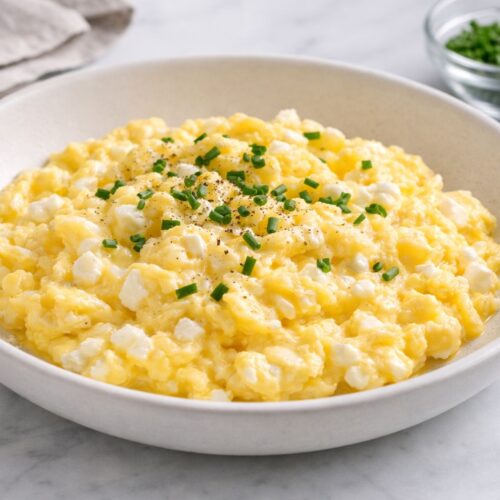
Creamy Cottage Cheese Scrambled Eggs

Equipment
- Medium nonstick skillet
- Silicone spatula preferred for gentle folding
- Medium mixing bowl
- Whisk or fork
- Measuring cups and spoons.
- Stove or cooktop
Ingredients
- 4 large eggs
- 1/2 cup full-fat cottage cheese
- 1 tablespoon unsalted butter
- 1/4 teaspoon fine sea salt adjust to taste
- 1/8 teaspoon freshly ground black pepper
- 1 tablespoon chopped fresh chives optional
- 1 tablespoon chopped fresh parsley optional
Instructions
Step 1: Whisk Until Silky
- Crack the eggs into a medium bowl, then add cottage cheese, salt, and pepper. Whisk gently until fully combined, keeping the mixture smooth but not foamy, with curds evenly suspended throughout.
Step 2: Melt the Butter Slowly
- Place a nonstick skillet over medium-low heat and add the butter. Let it melt slowly until lightly foamy and fragrant, but not browned, creating the perfect gentle base for tender eggs.
Step 3: Pour and Let It Set
- Pour the egg mixture into the warm skillet and allow it to sit undisturbed for about 20 to 30 seconds. The edges will begin to softly set while the center remains glossy.
Step 4: Fold, Don’t Stir
- Using a silicone spatula, gently push the eggs from the edges toward the center, tilting the pan so uncooked egg flows outward. Continue folding slowly until plush, creamy curds form.
Step 5: Remove Before Fully Set
- Remove the skillet from heat while the eggs still look slightly glossy and softly set. Residual heat will finish cooking them, keeping the texture tender and custardy instead of dry.
Step 6: Finish and Serve Immediately
- Transfer immediately to plates and sprinkle with fresh chives or parsley if desired. Serve warm while the eggs are steamy, soft, and irresistibly creamy in every bite.
Notes
- Cook over medium-low heat for the creamiest texture.
- Remove from heat while eggs still look slightly glossy.
- Use full-fat cottage cheese for best results.
- Serve immediately for optimal softness.
Hi, I’m Olivia Brooks! Cooking is my passion, and I love turning everyday ingredients into meals that bring joy to the table. On CulinaryPearl, I share simple recipes, helpful kitchen tips, and inspiration for food lovers everywhere