
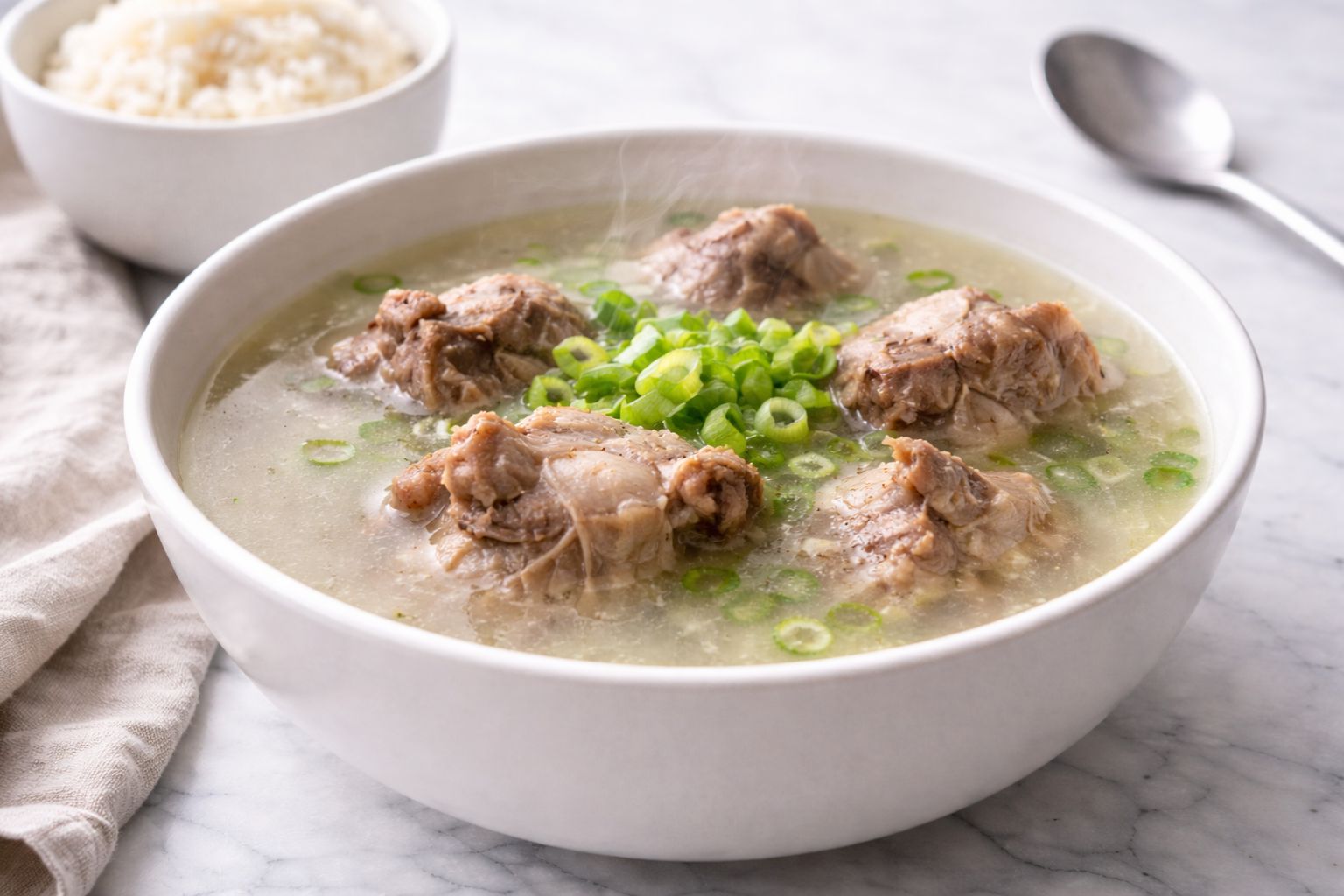
Alright, let’s settle in for something cozy, slow, and deeply comforting — the kind of recipe you make when you want your kitchen to smell amazing for hours and your soul to feel fed. Today we’re diving into the Korean Oxtail Soup Recipe, also known as Kkori Gomtang. This is not a quick weeknight dinner, and honestly? That’s the beauty of it.
I’m writing this like I’d explain it to you across my kitchen counter, apron on, pot simmering, because this soup deserves patience, love, and a little storytelling.
Korean Oxtail Soup Recipe (Kkori Gomtang)
There are soups that fill you up, and then there are soups that heal. Korean oxtail soup falls firmly into the second category. Clear, milky, deeply beefy, and quietly luxurious, this soup is all about extracting flavor from bones over time — no shortcuts, no heavy spices, no distractions.
If you’ve ever had seolleongtang or gomtang at a Korean restaurant, this is that same family of soups. Gentle. Clean. Nourishing. And somehow powerful without being loud.
What Is Korean Oxtail Soup?
Korean oxtail soup, or Kkori Gomtang, is a traditional Korean bone broth soup made by simmering oxtail for hours until the broth turns pale and milky. Unlike spicy Korean soups, this one starts completely unseasoned. No soy sauce. No chili paste. No garlic overload.
The seasoning happens at the table.
That’s one of my favorite things about this dish. Everyone customizes their own bowl with salt, scallions, black pepper, or even a spoonful of kimchi on the side. The soup itself stays pure, rich, and comforting.
In Korea, this soup is often eaten:
- In winter
- After illness
- By elders for strength
- By anyone who appreciates slow food done right
And yes, it’s famous for being restorative after long nights out — but you didn’t hear that from me.
Why This Korean Oxtail Soup Recipe Is Special
Let me be honest. Oxtail is not cheap anymore. It used to be a humble cut, but now everyone knows how magical it is. So when you buy it, you want to treat it with respect.
This recipe:
- Uses simple ingredients
- Focuses on proper bone cleaning
- Builds flavor through time, not seasoning
- Produces tender meat that falls off the bone
- Creates a broth you’ll want to sip straight from the bowl
No gimmicks. Just technique.
Flavor Profile: What Does It Taste Like?
If you’ve never had Korean oxtail soup before, don’t expect bold or spicy flavors upfront.
Think:
- Clean beef flavor
- Silky, slightly sticky broth (from collagen)
- Mild sweetness from slow-simmered bones
- Rich but not greasy
- Comforting in a very quiet way
It’s the kind of soup that doesn’t shout. It whispers. And once you get it, you really get it.
Equipment You’ll Need
Nothing fancy, but size matters here.
- Large stockpot (at least 8–10 quarts)
- Fine mesh strainer
- Large bowl for soaking bones
- Ladle
- Sharp knife
- Tongs
- Small bowls for table seasoning
If you have a heavy-bottomed pot, even better. This soup likes steady, gentle heat.
Ingredients
Here’s the beauty of this recipe — the ingredient list is short.
For the Soup
- 3 to 4 pounds oxtail, cut into sections
- Water (enough to fully submerge bones)
- 1 medium onion, halved
- 1-inch piece fresh ginger, sliced
- 2 scallions, cut into large pieces
For Serving
- Cooked white rice
- Thinly sliced scallions
- Salt (to taste)
- Freshly ground black pepper
- Optional: minced garlic
That’s it. No soy sauce. No sesame oil in the pot. We keep it clean.
Step 1: Cleaning and Soaking the Oxtail (Do Not Skip)
This step makes or breaks the final broth.
Place the oxtail pieces in a large bowl and cover with cold water. Let them soak for at least 2 hours, changing the water every 30 minutes if you can.
What’s happening here:
- Blood and impurities leach out
- The broth becomes clearer
- The flavor stays clean, not gamey
You’ll notice the water turning pinkish or cloudy. That’s normal. That’s what you want to remove.
Step 2: Blanching the Bones
Drain the soaked oxtail and transfer it to a large pot. Cover with fresh water and bring to a rolling boil.
Boil for 10–15 minutes.
During this time:
- Foam and scum will rise to the surface
- The smell may be strong (also normal)
Drain everything into a colander and rinse the oxtail thoroughly under running water. Scrub off any visible impurities.
Also rinse the pot. A clean pot matters.
Step 3: The Long Simmer (This Is Where Magic Happens)
Return the cleaned oxtail to the pot. Add:
- Onion
- Ginger
- Scallions
Cover with plenty of fresh water — at least 2 inches above the bones.
Bring to a boil, then reduce to a gentle simmer.
Simmer uncovered for 4 to 5 hours, occasionally skimming any foam or excess fat from the surface.
Over time, you’ll notice:
- The broth turning pale and milky
- The meat becoming tender
- The smell becoming rich and comforting
Add more hot water if needed to keep bones submerged.
Step 4: Removing Aromatics and Adjusting Broth
After the long simmer, remove and discard:
- Onion
- Ginger
- Scallions
Taste the broth. It will be flavorful but intentionally unseasoned.
If there’s too much fat on top, skim some off — but don’t remove all of it. That fat carries flavor and mouthfeel.
At this point, the meat should:
- Pull away easily from the bone
- Be soft but not mushy
Step 5: Serving the Korean Oxtail Soup
This is where tradition shines.
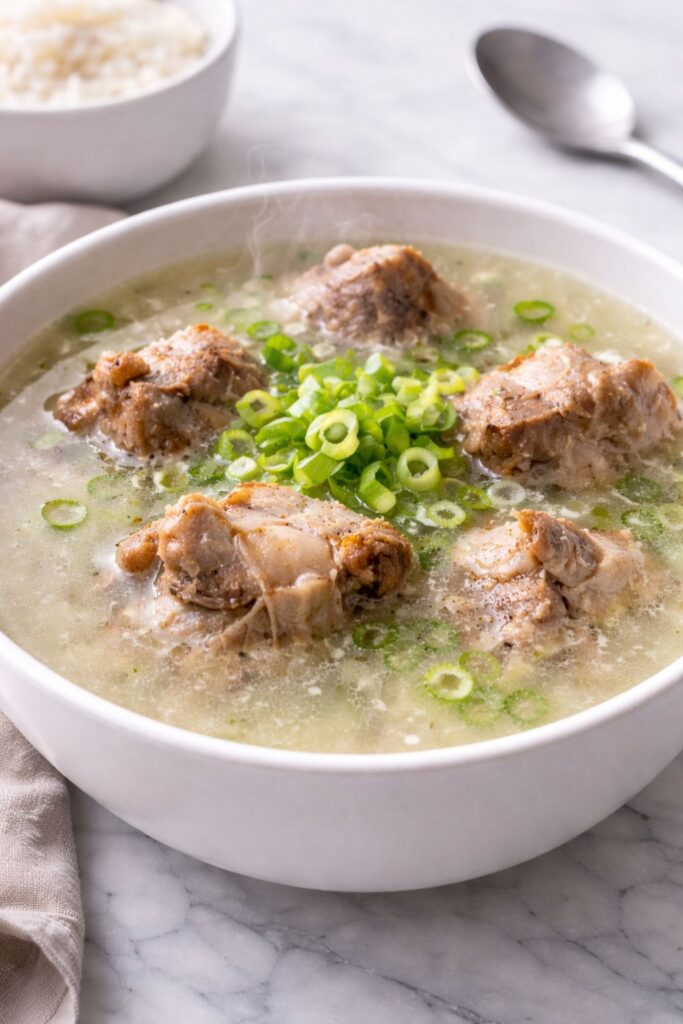
Place a scoop of hot white rice into each bowl. Ladle the steaming oxtail soup over the rice, making sure each bowl gets meat and broth.
Top with:
- Sliced scallions
- Cracked black pepper
Serve with salt on the side so everyone can season to taste.
How Koreans Season This Soup at the Table
This part is personal, and I love that.
Some people add:
- Just salt and pepper
- A tiny bit of minced garlic
- Extra scallions
- A spoon of kimchi on the side, not in the soup
The goal is balance. You don’t want to overpower the broth you worked so hard to build.
What to Serve With Korean Oxtail Soup
This soup loves simple sides.
Classic pairings:
- Napa cabbage kimchi
- Cubed radish kimchi (kkakdugi)
- Steamed rice (always)
- Simple seasoned spinach or bean sprouts
The soup is the star. Everything else supports it.
Storage and Reheating Tips
This soup gets better with time.
Refrigerating
- Cool completely
- Store in airtight containers
- Keeps for up to 4 days
You’ll notice the broth turns into jelly when cold. That’s collagen gold.
Freezing
- Freeze without rice
- Keeps well for up to 3 months
- Thaw overnight in the fridge
Reheating
- Reheat gently on the stovetop
- Add water if broth is too concentrated
- Taste and adjust salt after reheating
Common Mistakes to Avoid
Let’s save you some heartbreak.
- Skipping the soak → cloudy, gamey broth
- Seasoning the pot early → flat, heavy flavor
- Boiling too hard → greasy, broken broth
- Rushing the cook time → weak soup
This recipe rewards patience. Let it.
Variations You Can Try (After You Master the Classic)
Once you’ve made it the traditional way, you can play.
- Add sliced daikon radish during the last hour
- Add glass noodles to the bowl before serving
- Serve with chopped green chilies for heat
- Mix broth with rice and kimchi for a quick next-day meal
But first — learn the original.
Why This Soup Feels So Nourishing
There’s science and tradition working together here.
- Oxtail is rich in collagen
- Long simmering releases gelatin
- Warm broth supports digestion
- Simple seasoning makes it easy on the body
This is food your grandmother would insist you eat when you’re tired, sick, or just worn down by life.
And honestly? She’d be right.
Final Thoughts: Why You Should Make Korean Oxtail Soup at Least Once
This Korean Oxtail Soup Recipe isn’t flashy. It won’t trend because of bright colors or dramatic spice. But it’s one of those dishes that quietly becomes part of your cooking identity.
The kind you make:
- On cold weekends
- When someone needs comfort
- When you want to slow down
Put on some music. Let the pot simmer. Taste, adjust, and breathe.
That’s real cooking.
Korean Oxtail Soup Recipe

Equipment
- Large stockpot (at least 8–10 quarts)
- Fine mesh strainer
- Large bowl for soaking bones
- Ladle
- Sharp knife
- Tongs
- Small bowls for table seasoning
Ingredients
For the Soup
- 3 to 4 pounds oxtail cut into sections
- Water enough to fully submerge bones
- 1 medium onion halved
- 1- inch piece fresh ginger sliced
- 2 scallions cut into large pieces
For Serving
- Cooked white rice
- Thinly sliced scallions
- Salt to taste
- Freshly ground black pepper
- Optional: minced garlic
Instructions
Step 1: Cleaning and Soaking the Oxtail (Do Not Skip)
- This step makes or breaks the final broth.
- Place the oxtail pieces in a large bowl and cover with cold water. Let them soak for at least 2 hours, changing the water every 30 minutes if you can.
- What’s happening here:
- Blood and impurities leach out
- The broth becomes clearer
- The flavor stays clean, not gamey
- You’ll notice the water turning pinkish or cloudy. That’s normal. That’s what you want to remove.
Step 2: Blanching the Bones
- Drain the soaked oxtail and transfer it to a large pot. Cover with fresh water and bring to a rolling boil.
- Boil for 10–15 minutes.
- During this time:
- Foam and scum will rise to the surface
- The smell may be strong (also normal)
- Drain everything into a colander and rinse the oxtail thoroughly under running water. Scrub off any visible impurities.
- Also rinse the pot. A clean pot matters.
Step 3: The Long Simmer (This Is Where Magic Happens)
- Return the cleaned oxtail to the pot. Add:
- Onion
- Ginger
- Scallions
- Cover with plenty of fresh water — at least 2 inches above the bones.
- Bring to a boil, then reduce to a gentle simmer.
- Simmer uncovered for 4 to 5 hours, occasionally skimming any foam or excess fat from the surface.
- Over time, you’ll notice:
- The broth turning pale and milky
- The meat becoming tender
- The smell becoming rich and comforting
- Add more hot water if needed to keep bones submerged.
Step 4: Removing Aromatics and Adjusting Broth
- After the long simmer, remove and discard:
- Onion
- Ginger
- Scallions
- Taste the broth. It will be flavorful but intentionally unseasoned.
- If there’s too much fat on top, skim some off — but don’t remove all of it. That fat carries flavor and mouthfeel.
- At this point, the meat should:
- Pull away easily from the bone
- Be soft but not mushy
Step 5: Serving the Korean Oxtail Soup
- This is where tradition shines.
- Place a scoop of hot white rice into each bowl. Ladle the steaming oxtail soup over the rice, making sure each bowl gets meat and broth.
- Top with:
- Sliced scallions
- Cracked black pepper
- Serve with salt on the side so everyone can season to taste.
Hi, I’m Olivia Brooks! Cooking is my passion, and I love turning everyday ingredients into meals that bring joy to the table. On CulinaryPearl, I share simple recipes, helpful kitchen tips, and inspiration for food lovers everywhere