
Intro
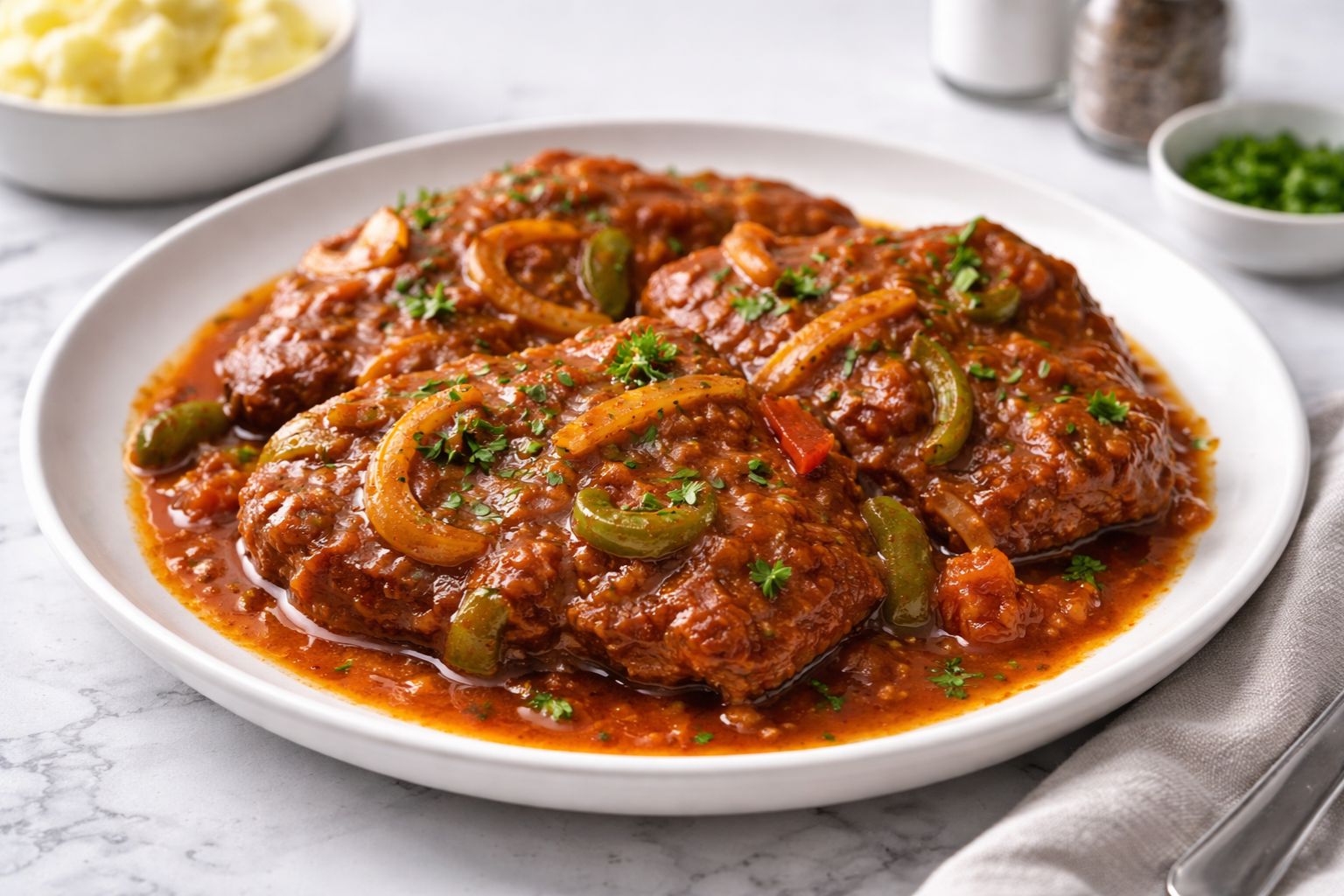
There’s something deeply comforting about a slow-cooked meal that fills your kitchen with rich, savory aromas. The Pioneer Woman Swiss Steak Recipe is one of those timeless dishes that feels like a warm hug after a long day.
I still remember the first time I made it — standing in my kitchen, apron slightly dusted with flour, listening to the gentle sizzle of beef meeting a hot pan. It wasn’t just cooking; it was therapy.
I had just come home from a long, exhausting day, the kind where everything feels rushed and a little out of place. I didn’t want anything fancy — just something honest and comforting.
That’s when I remembered this recipe. As the onions softened and the garlic released that irresistible aroma, I could already tell it was going to be one of those meals that settles not just your hunger, but your mood too.
This dish brings together tenderized beef, a hearty tomato-based sauce, and simple pantry staples to create something magical. The flavors are bold yet comforting — juicy, fork-tender meat soaked in a tangy, slightly sweet sauce infused with onions, garlic, and bell peppers.
If you love meals that feel nostalgic, satisfying, and deeply homemade, you’re going to fall in love with this Pioneer Woman Swiss Steak Recipe.
What is Pioneer Woman Swiss Steak Recipe?
Swiss steak isn’t actually from Switzerland — surprising, right? The name comes from the process of “swissing,” which means tenderizing tough cuts of meat by pounding or rolling them.
Growing up, dishes like this were a regular part of our dinner table. Not because they were trendy, but because they made sense. Affordable cuts of beef transformed into something soft, flavorful, and deeply satisfying — that’s the beauty of traditional cooking.
The Pioneer Woman Swiss Steak Recipe is a classic American comfort dish made using round steak that’s been tenderized, lightly coated in flour, browned, and then slow-cooked in a rich tomato gravy. Over time, the meat becomes incredibly soft, soaking up all the flavors of the sauce.
What makes this version special is its simplicity and depth of flavor. It’s rustic, hearty, and incredibly satisfying — the kind of meal you’d serve on a cozy evening with family gathered around the table, plates piled high and conversations flowing easily.
Equipment List
Before you get started, here’s what you’ll need in your kitchen:
- Large heavy-bottomed skillet or Dutch oven
- Meat mallet (for tenderizing)
- Cutting board
- Sharp knife
- Mixing bowls
- Wooden spoon or spatula
- Measuring cups and spoons
Having the right tools makes the process smoother and honestly, more enjoyable. I always say cooking should feel relaxed, not rushed.
Recipe Card Info
- Prep Time: 15 minutes
- Cook Time: 1 hour 45 minutes
- Total Time: 2 hours
- Serves: 4 people
- Cuisine: Dinner
- Course: Main Course
- Calories: 420 kcal per serving
Ingredients
Here’s everything you’ll need to bring this dish to life:
- 1 ½ pounds round steak
- ½ cup all-purpose flour
- 1 teaspoon salt
- 1 teaspoon black pepper
- 2 tablespoons olive oil
- 1 large onion, sliced
- 1 green bell pepper, sliced
- 3 cloves garlic, minced
- 1 can (14.5 oz) diced tomatoes
- 1 cup beef broth
- 1 tablespoon Worcestershire sauce
- 1 teaspoon paprika
- 1 teaspoon dried thyme
Each ingredient plays a role. The tomatoes bring brightness, the broth adds depth, and the Worcestershire sauce gives that subtle umami kick that makes everything taste fuller.
Instructions
Step 1: Tenderize the Meat
Place the round steak on a cutting board and use a meat mallet to pound it until it’s about ½ inch thick. This step is key to making the meat tender. Don’t skip it — it truly makes all the difference.
Step 2: Season and Coat
In a bowl, mix flour, salt, and pepper. Coat each piece of steak in the flour mixture, shaking off any excess. This light coating helps create that beautiful crust when searing.
Step 3: Sear the Steak
Heat olive oil in a large skillet over medium-high heat. Add the steak and brown both sides until golden. You’re not cooking it through here — just building flavor.
Step 4: Build the Flavor Base
In the same pan, sauté onions and bell peppers until softened. Add garlic and cook for another minute. The smell at this stage is absolutely irresistible.
Step 5: Create the Sauce
Pour in diced tomatoes, beef broth, Worcestershire sauce, paprika, and thyme. Stir well, scraping up any browned bits from the pan. That’s where all the flavor lives.
Step 6: Slow Cook
Return the steak to the pan. Cover and simmer on low heat for about 1 hour 30 minutes, or until the meat is fork-tender. This is where the magic happens — the meat relaxes and absorbs everything.
Step 7: Serve
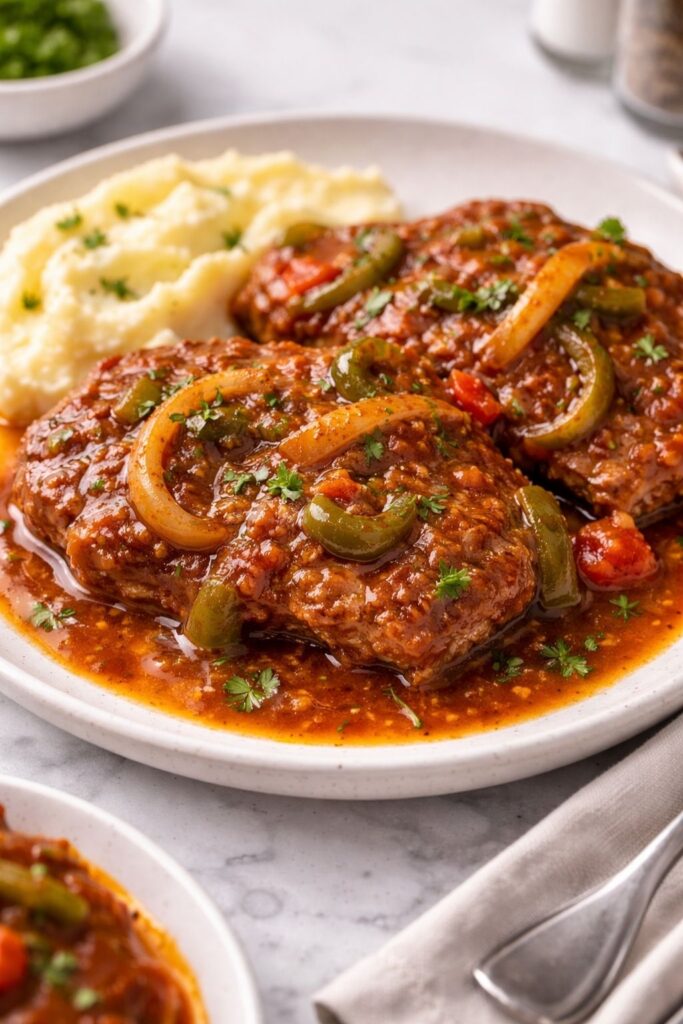
Serve hot with mashed potatoes, rice, or crusty bread. Spoon that rich sauce generously over everything.
The Heart of Comfort Cooking
What I love most about the Pioneer Woman Swiss Steak Recipe is how it reminds me to slow down. In a world where everything feels rushed, this dish asks you to take your time. To listen to the simmer, to taste as you go, to enjoy the process.
There’s something deeply grounding about cooking this way. It’s not about perfection — it’s about connection. To food, to memories, to the people you share it with.
Flavor Profile
The Pioneer Woman Swiss Steak Recipe delivers a beautiful balance of flavors:
- Savory: From the beef and broth
- Tangy: From the tomatoes and Worcestershire sauce
- Slightly Sweet: From the onions and peppers
- Earthy: From the herbs and spices
Every bite feels hearty, rich, and incredibly satisfying — the kind of meal that makes you close your eyes for a second just to enjoy it.
Tips for Perfect Swiss Steak
- Always tenderize the meat well
- Don’t rush the cooking time — low and slow is key
- Use a heavy pan to maintain even heat
- Taste the sauce and adjust seasoning as needed
- Let it rest for a few minutes before serving
Common Mistakes to Avoid
One thing I’ve learned over the years is that even simple recipes can go wrong if you rush them. Avoid cooking on high heat for too long — it can toughen the meat instead of tenderizing it.
Another mistake is skipping the searing step. That golden crust adds layers of flavor you don’t want to miss.
Variations You Can Try
- Add mushrooms for extra depth
- Use red bell peppers for sweetness
- Make it spicy with chili flakes
- Try it in a slow cooker for convenience
Each variation adds a slightly different personality to the dish, but the heart of it remains the same.
Best Side Dishes
Pair this dish with:
- Creamy mashed potatoes
- Steamed rice
- Buttered noodles
- Fresh green beans
Personally, I always go for mashed potatoes — they soak up that sauce beautifully.
Storage and Reheating
Store leftovers in an airtight container in the refrigerator for up to 3 days. Reheat gently on the stove or microwave, adding a splash of broth if needed.
The flavors actually deepen overnight, making leftovers something to look forward to.
Frequently Asked Questions
Can I use a different cut of beef?
Yes, chuck steak works well too, as it becomes tender when slow-cooked.
Can I make this ahead of time?
Absolutely! It tastes even better the next day as the flavors develop.
Is it freezer-friendly?
Yes, freeze in portions for up to 2 months.
Can I make it without tomatoes?
You can substitute with a light gravy base, but tomatoes really define the classic flavor.
Final Thoughts
Cooking the Pioneer Woman Swiss Steak Recipe is more than just preparing a meal — it’s about slowing down, enjoying the process, and creating something deeply comforting.
Every time I make it, I’m reminded why I fell in love with cooking in the first place. It’s not just about feeding people — it’s about creating moments. Warm, simple, meaningful moments.
So tie that apron, take your time, and let your kitchen fill with the kind of aroma that feels like home.
Pioneer Woman Swiss Steak Recipe

Equipment
- Large heavy-bottomed skillet or Dutch oven
- Meat mallet (for tenderizing)
- Cutting board
- Sharp knife
- Mixing bowls
- Wooden spoon or spatula
- Measuring cups and spoons.
Ingredients
- 1 ½ pounds round steak
- ½ cup all-purpose flour
- 1 teaspoon salt
- 1 teaspoon black pepper
- 2 tablespoons olive oil
- 1 large onion sliced
- 1 green bell pepper sliced
- 3 cloves garlic minced
- 1 can 14.5 oz diced tomatoes
- 1 cup beef broth
- 1 tablespoon Worcestershire sauce
- 1 teaspoon paprika
- 1 teaspoon dried thyme
Instructions
Step 1: Tenderize the Meat
- Place the round steak on a cutting board and use a meat mallet to pound it until it’s about ½ inch thick. This step is key to making the meat tender. Don’t skip it — it truly makes all the difference.
Step 2: Season and Coat
- In a bowl, mix flour, salt, and pepper. Coat each piece of steak in the flour mixture, shaking off any excess. This light coating helps create that beautiful crust when searing.
Step 3: Sear the Steak
- Heat olive oil in a large skillet over medium-high heat. Add the steak and brown both sides until golden. You’re not cooking it through here — just building flavor.
Step 4: Build the Flavor Base
- In the same pan, sauté onions and bell peppers until softened. Add garlic and cook for another minute. The smell at this stage is absolutely irresistible.
Step 5: Create the Sauce
- Pour in diced tomatoes, beef broth, Worcestershire sauce, paprika, and thyme. Stir well, scraping up any browned bits from the pan. That’s where all the flavor lives.
Step 6: Slow Cook
- Return the steak to the pan. Cover and simmer on low heat for about 1 hour 30 minutes, or until the meat is fork-tender. This is where the magic happens — the meat relaxes and absorbs everything.
Step 7: Serve
- Serve hot with mashed potatoes, rice, or crusty bread. Spoon that rich sauce generously over everything.
Notes
- Always tenderize the meat well
- Don’t rush the cooking time — low and slow is key
- Use a heavy pan to maintain even heat
- Taste the sauce and adjust seasoning as needed
- Let it rest for a few minutes before serving
Hi, I’m Olivia Brooks! Cooking is my passion, and I love turning everyday ingredients into meals that bring joy to the table. On CulinaryPearl, I share simple recipes, helpful kitchen tips, and inspiration for food lovers everywhere