
Intro
The first time I made this Lobster Tail Pastry Recipe, I was standing barefoot in my kitchen, flour on my cheeks, and music playing too loud in the background. I remember thinking, “Why does something this elegant feel so intimidating?” And then I took that first bite—crispy, shattering layers giving way to silky cream—and I understood. Some recipes are not just desserts. They are experiences.
If you have ever walked past a bakery window and stared at those golden, shell-shaped pastries filled with dreamy cream, this is for you. This Lobster Tail Pastry Recipe looks impressive, almost dramatic, but I promise you—it is something you can make at home. Yes, even in your small kitchen. Yes, even if laminated dough makes you nervous.
As a home cook who fell in love with pastry the hard way (after many buttery disasters), I am here to guide you step by step. We will talk about texture, flavor, and technique. We will make a little mess. And in the end, you will hold in your hands a pastry that feels like it came from a tiny Italian bakery.
Let’s get into it.
What is Lobster Tail Pastry Recipe?
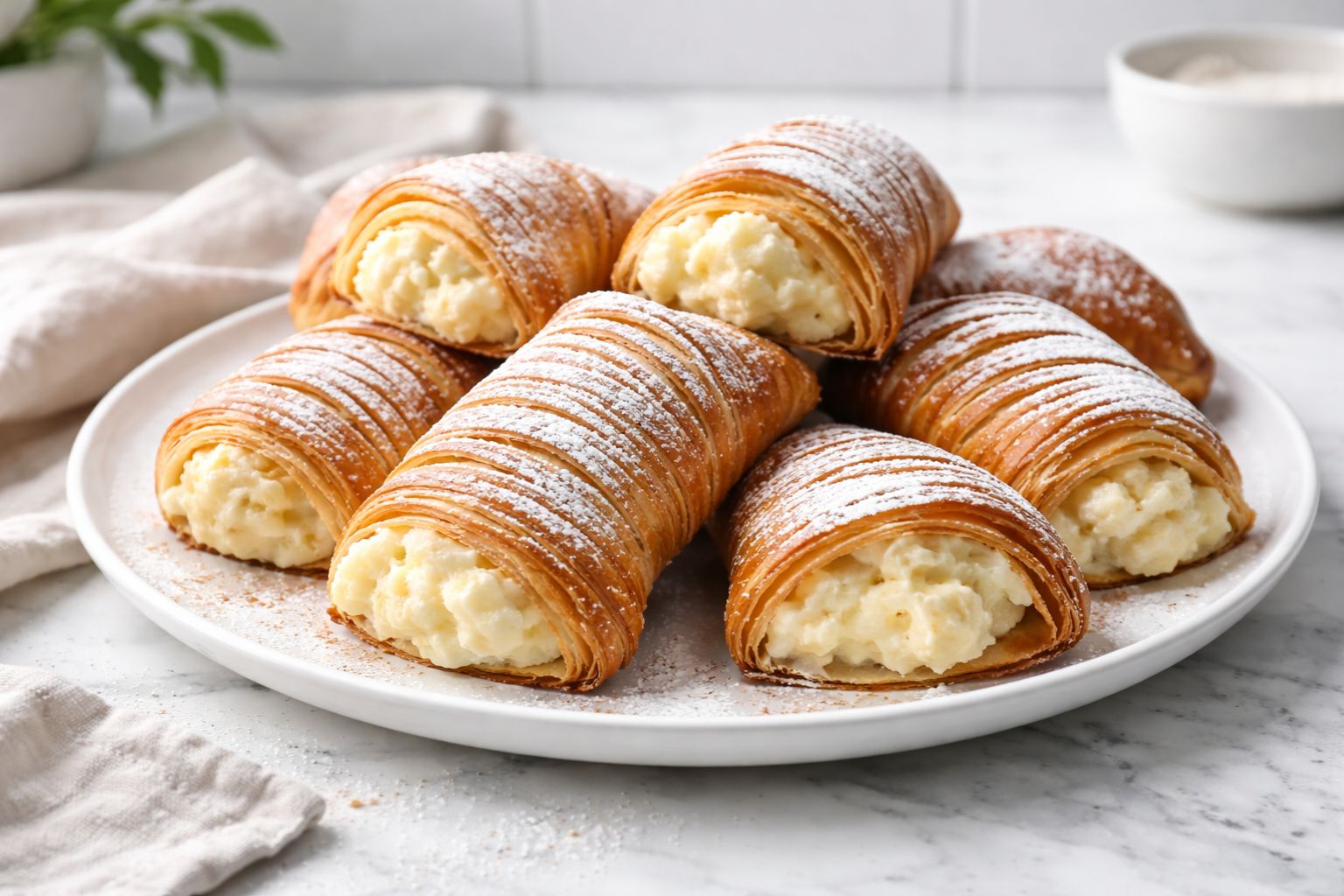
Despite the name, there is no seafood here. The “lobster tail” refers to the shape. This pastry, inspired by the Italian sfogliatella, is shaped like a fan or shell—wide at one end and narrow at the other—just like a lobster tail.
The outside is made from thin, flaky layers of dough, rolled tightly and sliced so that the layers spread and crisp in the oven. When baked, it becomes golden brown, deeply crisp, and beautifully layered. The inside? A rich, creamy filling that can be made with sweet ricotta, pastry cream, or whipped custard.
In this version, I combine silky pastry cream with a touch of lightly sweetened ricotta. The result is smooth but slightly textured, rich but not heavy. There is a whisper of vanilla and citrus zest that brightens every bite.
This Lobster Tail Pastry Recipe is about contrast: crisp and creamy, buttery and lightly sweet, rustic and elegant at the same time.
Equipment List
Before we begin, let’s gather what you need. Having everything ready makes the process calm and joyful.
- Large mixing bowl
- Stand mixer with dough hook (optional but helpful)
- Rolling pin
- Plastic wrap
- Bench scraper
- Baking sheet
- Parchment paper
- Pastry brush
- Small saucepan (for cream filling)
- Whisk
- Piping bag with round tip
- Sharp knife
- Cooling rack
You do not need fancy bakery tools. Just patience and a little love for butter.
Recipe Card Info
Recipe Name: Lobster Tail Pastry
Prep Time: 1 hour (plus chilling time) Cook Time: 25–30 minutes Chill Time: 2–4 hours Total Time: About 4–5 hours (including rest) Serves: 8 pastries Cuisine: Italian-inspired Course: Dessert / Pastry Calories: Approximately 420 calories per pastry
Ingredients
For the Dough
- 3 cups (375g) all-purpose flour
- 1 teaspoon salt
- 1 tablespoon sugar
- 1 cup (240ml) warm water
- 2 tablespoons unsalted butter, softened
For Laminating
- 1 cup (225g) unsalted butter, melted (for brushing between layers)
For the Cream Filling
- 2 cups whole milk
- 1/2 cup granulated sugar
- 3 egg yolks
- 1/4 cup cornstarch
- 1 teaspoon pure vanilla extract
- 1/2 cup ricotta cheese (drained well)
- Zest of 1 orange
- Pinch of salt
For Finishing
- Powdered sugar for dusting
Instructions
Step 1: Make the Dough
In a large bowl, combine flour, salt, and sugar. Slowly add warm water while mixing. Add the softened butter and knead until a smooth, elastic dough forms. This will take about 8–10 minutes by hand or 5–6 minutes in a mixer.
The dough should feel soft but not sticky. If it sticks to your fingers, sprinkle in a little more flour.
Wrap tightly in plastic wrap and let it rest for 30 minutes at room temperature.
Step 2: Prepare the Cream Filling
In a saucepan, heat the milk until just warm—not boiling.
In a separate bowl, whisk sugar, egg yolks, cornstarch, and salt until pale and smooth. Slowly pour the warm milk into the egg mixture while whisking constantly.
Return the mixture to the saucepan and cook over medium heat, stirring continuously, until thick and glossy. Remove from heat and stir in vanilla.
Let it cool completely. Once cool, fold in ricotta and orange zest. The filling should be creamy, lightly citrusy, and smooth with a gentle richness.
Cover and refrigerate.
Step 3: Roll the Dough Thin
Now comes the fun part. Divide the rested dough into two pieces.
Roll one piece as thin as you possibly can. I mean really thin—almost see-through. You should almost be able to read a recipe through it. This thinness is what creates those delicate layers.
Brush the entire surface generously with melted butter.
Starting from one end, roll the dough tightly into a log, like a jelly roll. Wrap tightly in plastic wrap and chill for at least 2 hours. Repeat with the second piece.
Step 4: Shape the Pastries
Preheat your oven to 375°F (190°C). Line a baking sheet with parchment paper.
Take one chilled dough log and slice into 1-inch thick rounds. Each slice will show beautiful spiral layers.
Gently press each piece with your thumbs to create a hollow cone shape. Be careful not to tear the layers. This takes patience.
Step 5: Fill and Bake
Pipe the chilled cream filling into each shell. Do not overfill—leave a little space for expansion.
Place on the prepared baking sheet and bake for 25–30 minutes, or until deeply golden brown and crisp.
Cool completely on a rack.
Dust with powdered sugar before serving.
And there it is. Your Lobster Tail Pastry Recipe masterpiece.

The Flavor Story
When you bite into this pastry, the first thing you hear is the crunch. It is loud. Shattery. Almost dramatic.
Then the cream melts against the crisp layers. The pastry is buttery but not greasy. The filling is sweet but balanced. The ricotta gives body. The vanilla feels warm. The orange zest lifts everything with brightness.
It is not overly sugary. It tastes refined. Clean. Elegant.
Tips From My Kitchen
1. Thin Dough is Everything
If your dough is too thick, you will not get those beautiful layers. Roll it thinner than you think you should.
2. Chill Properly
Cold dough creates cleaner layers. If the butter melts too soon, the layers blur together.
3. Drain Ricotta Well
Excess moisture can make the filling runny. Let it sit in a sieve for at least 30 minutes before using.
4. Bake Until Deep Golden
Do not pull them out too early. The color equals flavor
Common Mistakes to Avoid
- Skipping resting time (the dough needs to relax)
- Using warm filling (it will melt the layers)
- Underbaking (you lose crisp texture)
- Overfilling (the cream leaks out)
Trust the process. Pastry rewards patience.
Make-Ahead and Storage
You can prepare the dough logs a day in advance and keep them refrigerated.
The cream filling can also be made 24 hours ahead.
Once baked, these pastries are best enjoyed the same day. If needed, store in an airtight container for up to 2 days. Reheat briefly in the oven to bring back crispness.
Variations You Can Try
- Add mini chocolate chips to the filling.
- Replace orange zest with lemon zest.
- Add a touch of cinnamon for warmth.
- Fold whipped cream into the pastry cream for lighter texture.
Each variation gives a new personality to this Lobster Tail Pastry Recipe without changing its soul.
Why This Recipe Feels Special to Me
As a female chef who learned through trial and error, this pastry represents growth. The first time I tried laminated dough, it failed miserably. Butter everywhere. Tears included.
But pastry teaches resilience. It teaches patience. And it teaches you that beauty often comes from careful layering—just like life.
Now, every time I make this Lobster Tail Pastry Recipe, I remember that progress happens in layers too.
Serving Ideas
Serve slightly warm with espresso.
Pair with fresh berries.
Add a scoop of vanilla ice cream for contrast.
Or enjoy it quietly, standing at the kitchen counter, while no one is watching. That might be my favorite way.
Frequently Asked Questions
Can I freeze them?
You can freeze the unfilled baked shells. Fill after reheating.
Can I use store-bought puff pastry?
You can, but the texture will be different. Traditional layering creates a tighter, crispier shell.
Is it very sweet?
No. The sweetness is balanced and gentle.
Final Thoughts
This is not a quick weekday dessert. It is a weekend project. A slow afternoon. Flour in your hair and butter on your hands.
But when you pull that tray from the oven and see those golden shells, you will feel proud. And when you take that first bite, you will understand why this pastry is loved by so many.
The beauty of this Lobster Tail Pastry Recipe is not just in its appearance. It is in the layers of effort, flavor, and heart.
And trust me—once you make it, you will make it again.
Happy baking.
With love, A passionate home cook
More Delicious Desserts:

Lobster Tail Pastry Recipe

Equipment
- Large mixing bowl
- Stand mixer with dough hook (optional but helpful)
- Rolling Pin
- Plastic wrap
- Bench scraper
- Baking sheet
- Parchment paper
- Pastry brush
- Small saucepan (for cream filling)
- Whisk
- Piping bag with round tip
- Sharp knife
- Cooling rack
Ingredients
For the Dough
- 3 cups 375g all-purpose flour
- 1 teaspoon salt
- 1 tablespoon sugar
- 1 cup 240ml warm water
- 2 tablespoons unsalted butter softened
For Laminating
- 1 cup 225g unsalted butter, melted (for brushing between layers)
For the Cream Filling
- 2 cups whole milk
- 1/2 cup granulated sugar
- 3 egg yolks
- 1/4 cup cornstarch
- 1 teaspoon pure vanilla extract
- 1/2 cup ricotta cheese drained well
- Zest of 1 orange
- Pinch of salt
For Finishing
- Powdered sugar for dusting
Instructions
Step 1: Make the Dough
- In a large bowl, combine flour, salt, and sugar. Slowly add warm water while mixing. Add the softened butter and knead until a smooth, elastic dough forms. This will take about 8–10 minutes by hand or 5–6 minutes in a mixer.
- The dough should feel soft but not sticky. If it sticks to your fingers, sprinkle in a little more flour.
- Wrap tightly in plastic wrap and let it rest for 30 minutes at room temperature.
Step 2: Prepare the Cream Filling
- In a saucepan, heat the milk until just warm—not boiling.
- In a separate bowl, whisk sugar, egg yolks, cornstarch, and salt until pale and smooth. Slowly pour the warm milk into the egg mixture while whisking constantly.
- Return the mixture to the saucepan and cook over medium heat, stirring continuously, until thick and glossy. Remove from heat and stir in vanilla.
- Let it cool completely. Once cool, fold in ricotta and orange zest. The filling should be creamy, lightly citrusy, and smooth with a gentle richness.
- Cover and refrigerate.
Step 3: Roll the Dough Thin
- Now comes the fun part. Divide the rested dough into two pieces.
- Roll one piece as thin as you possibly can. I mean really thin—almost see-through. You should almost be able to read a recipe through it. This thinness is what creates those delicate layers.
- Brush the entire surface generously with melted butter.
- Starting from one end, roll the dough tightly into a log, like a jelly roll. Wrap tightly in plastic wrap and chill for at least 2 hours. Repeat with the second piece.
Step 4: Shape the Pastries
- Preheat your oven to 375°F (190°C). Line a baking sheet with parchment paper.
- Take one chilled dough log and slice into 1-inch thick rounds. Each slice will show beautiful spiral layers.
- Gently press each piece with your thumbs to create a hollow cone shape. Be careful not to tear the layers. This takes patience.
Step 5: Fill and Bake
- Pipe the chilled cream filling into each shell. Do not overfill—leave a little space for expansion.
- Place on the prepared baking sheet and bake for 25–30 minutes, or until deeply golden brown and crisp.
- Cool completely on a rack.
- Dust with powdered sugar before serving.
- And there it is. Your Lobster Tail Pastry Recipe masterpiece.
Hi, I’m Olivia Brooks! Cooking is my passion, and I love turning everyday ingredients into meals that bring joy to the table. On CulinaryPearl, I share simple recipes, helpful kitchen tips, and inspiration for food lovers everywhere