
Intro
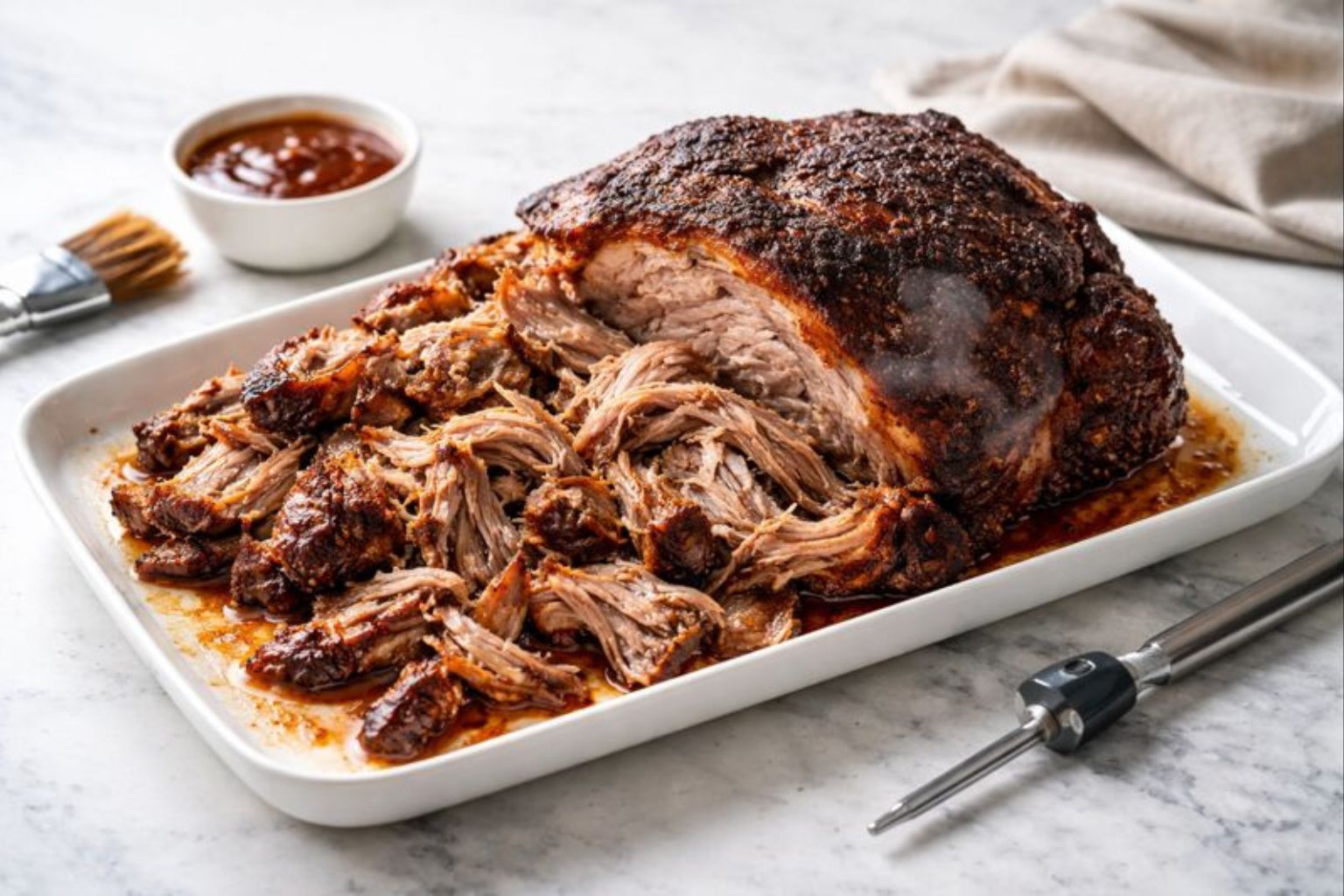
This is one of those dishes that feels like a warm hug from the smoker. Pit Boss Pork Shoulder Recipe was actually the first long, slow smoke I ever trusted myself with, and I still remember pacing around the backyard like a nervous parent. Pork shoulder is forgiving, flavorful, and deeply comforting, which is probably why I keep coming back to it whenever I want to cook something that feeds both people and souls.
I’m not a fancy chef when I’m at home. I cook barefoot, hair tied up, music playing, and a cold drink nearby. This recipe fits that vibe perfectly. It’s slow food in the best way. You season it, let the smoker do its thing, and somehow hours later you’re rewarded with meat so tender it practically falls apart when you look at it. The smell alone will make your neighbors suspiciously friendly.
This isn’t about perfection. It’s about patience, smoke, and letting pork shoulder become its best self. I’ll walk you through everything, from choosing the cut to pulling the meat with your hands because forks just don’t feel right. If you’ve ever felt intimidated by smoking meat, this is your sign. You’ve got this.
What is Pit Boss Pork Shoulder?
Pit Boss pork shoulder is a slow-smoked pork roast cooked on a Pit Boss pellet grill. Pork shoulder, sometimes called pork butt (confusing, I know), comes from the upper part of the pig’s front leg. It’s well-marbled, tough at first, and absolutely magical when cooked low and slow.
What makes it special on a Pit Boss is the steady temperature control and wood pellet smoke. You get real wood flavor without babysitting a fire all day. Over several hours, the fat melts, the connective tissue breaks down, and the meat turns juicy, rich, and deeply savory.
This isn’t a quick dinner. This is an all-day love affair with smoke and time. And the result? Pulled pork that’s perfect for sandwiches, tacos, loaded baked potatoes, or eaten straight from the tray while standing at the counter.
Equipment List
You don’t need a lot of fancy gear, but a few basics make life easier:
- Pit Boss pellet grill (any model works)
- Wood pellets (hickory, apple, or a blend)
- Meat thermometer (instant-read or probe)
- Large cutting board
- Sharp knife
- Aluminum foil or butcher paper
- Spray bottle (for apple juice or vinegar mix)
- Heat-resistant gloves (trust me on this)
- Drip pan (optional but helpful)
Ingredients (with quantities)
Here’s what I use. Simple, bold, and flexible.
- 8 to 10 lb pork shoulder (bone-in preferred)
- 2 tablespoons olive oil or yellow mustard (binder)
- 3 tablespoons kosher salt
- 2 tablespoons black pepper
- 2 tablespoons paprika (smoked if you have it)
- 1 tablespoon brown sugar
- 1 tablespoon garlic powder
- 1 tablespoon onion powder
- 1 teaspoon chili powder (optional)
- 1 cup apple juice (for spritzing)
- 1/4 cup apple cider vinegar (optional, for spritz)
That’s it. No mystery ingredients. Just flavors that love pork.
Instructions
Step 1: Prep the Pork
Take the pork shoulder out of the fridge about 45 minutes before cooking. Cold meat doesn’t like smoke. Pat it dry with paper towels.
Rub the whole thing lightly with olive oil or mustard. This isn’t for flavor, it’s just glue for the seasoning.
Mix all your dry ingredients in a bowl. Generously coat every inch of the pork. Get into the crevices. Talk to it if you want. I do.
Let it sit while you fire up the Pit Boss.
Step 2: Preheat the Pit Boss
Set your Pit Boss to 225°F. Low and slow is the name of the game. Load your pellets and let the grill fully preheat with the lid closed.
I love hickory for a bold, classic flavor, but apple wood gives a softer, slightly sweet smoke. Use what makes you happy.
Step 3: Start Smoking
Place the pork shoulder directly on the grill grates, fat side up. Close the lid and don’t touch it for the first 2 hours. This is where the bark starts to form.
After 2 hours, begin spritzing every 45 minutes with apple juice or an apple juice and vinegar mix. This keeps the surface moist and helps smoke stick.
Step 4: The Stall (Don’t Panic)
Around 160–170°F internal temperature, the pork will stall. It might sit there for hours. This is normal. This is science and patience holding hands.
You have two options:
- Let it ride unwrapped for deeper bark
- Wrap it in foil or butcher paper to push through faster
I usually wrap around 170°F because I like sleeping at night.
Step 5: Finish Cooking
Once wrapped, place the pork back on the Pit Boss and increase the temperature to 250°F.
Cook until the internal temperature reaches 203°F. Not 190. Not “close enough.” 203°F is where magic happens.
Step 6: Rest
Remove the pork and let it rest, wrapped, for at least 1 hour. This step matters. The juices redistribute and the meat relaxes.
I usually rest it in a cooler with towels. It’ll stay hot for hours.
Step 7: Pull and Serve
Put on gloves and shred the pork by hand. Discard large chunks of fat and the bone.
Taste it. Adjust salt if needed. Try not to eat half of it before serving.
Flavor Profile and Why It Works
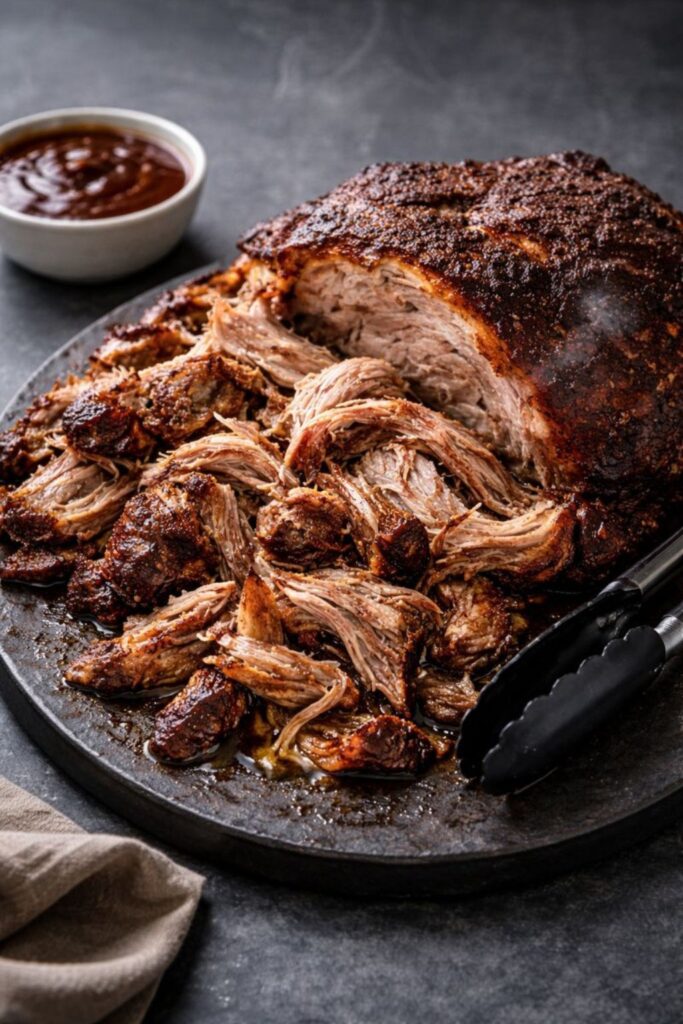
This Pit Boss Pork Shoulder Recipe is all about balance. You get smoky depth from the pellets, savory richness from the pork, subtle sweetness from brown sugar, and warmth from paprika and garlic.
The bark is dark, salty, and slightly crisp. Inside, the meat is juicy and soft with strands that pull apart effortlessly. Every bite tastes like time well spent.
Best Wood Pellets for Pork Shoulder
- Hickory: Bold, traditional barbecue flavor
- Apple: Mild, sweet, and crowd-friendly
- Cherry: Slightly sweet with gorgeous color
- Blends: Safe and balanced
Avoid mesquite unless you love very strong smoke.
Common Mistakes to Avoid
- Cooking too hot: This dries out the meat
- Skipping the rest: You’ll lose juices
- Under-seasoning: Big cuts need bold seasoning
- Rushing the stall: Let it do its thing
Serving Ideas
Pulled pork is endlessly versatile:
- Classic sandwiches with slaw
- Street-style tacos
- Loaded nachos
- Breakfast hash with eggs
- Stuffed baked potatoes
Leftovers freeze beautifully too.
Storage and Reheating
Store pulled pork in airtight containers for up to 4 days in the fridge.
To reheat, add a splash of apple juice, cover, and warm gently. Microwave works, but stovetop or oven is better.
Why I Love This Recipe
As a home cook and chef, this Pit Boss Pork Shoulder Recipe reminds me why I fell in love with cooking. It’s slow, forgiving, and deeply satisfying. It doesn’t rush you. It invites you to relax, trust the process, and feed people you care about.
Every time I make it, someone asks for the recipe. And every time, I smile because it’s not really a secret. It’s just patience, smoke, and love.
If you try it, make it your own. Add spice. Change the wood. Cook barefoot. That’s the real recipe.
Some More Recipes:
Pit Boss Pork Shoulder Recipe

Equipment
- Pit Boss pellet grill (any model works)
- Wood pellets (hickory, apple, or a blend)
- Meat thermometer (instant-read or probe)
- Large cutting board
- Sharp knife
- Aluminum foil or butcher paper
- Spray bottle (for apple juice or vinegar mix)
- Heat-resistant gloves (trust me on this)
- Drip pan (optional but helpful)
Ingredients
- 8 to 10 lb pork shoulder bone-in preferred
- 2 tablespoons olive oil or yellow mustard binder
- 3 tablespoons kosher salt
- 2 tablespoons black pepper
- 2 tablespoons paprika smoked if you have it
- 1 tablespoon brown sugar
- 1 tablespoon garlic powder
- 1 tablespoon onion powder
- 1 teaspoon chili powder optional
- 1 cup apple juice for spritzing
- 1/4 cup apple cider vinegar optional, for spritz
Instructions
Step 1: Prep the Pork
- Take the pork shoulder out of the fridge about 45 minutes before cooking. Cold meat doesn’t like smoke. Pat it dry with paper towels.
- Rub the whole thing lightly with olive oil or mustard. This isn’t for flavor, it’s just glue for the seasoning.
- Mix all your dry ingredients in a bowl. Generously coat every inch of the pork. Get into the crevices. Talk to it if you want. I do.
- Let it sit while you fire up the Pit Boss.
Step 2: Preheat the Pit Boss
- Set your Pit Boss to 225°F. Low and slow is the name of the game. Load your pellets and let the grill fully preheat with the lid closed.
- I love hickory for a bold, classic flavor, but apple wood gives a softer, slightly sweet smoke. Use what makes you happy.
Step 3: Start Smoking
- Place the pork shoulder directly on the grill grates, fat side up. Close the lid and don’t touch it for the first 2 hours. This is where the bark starts to form.
- After 2 hours, begin spritzing every 45 minutes with apple juice or an apple juice and vinegar mix. This keeps the surface moist and helps smoke stick.
Step 4: The Stall (Don’t Panic)
- Around 160–170°F internal temperature, the pork will stall. It might sit there for hours. This is normal. This is science and patience holding hands.
- You have two options:
- Let it ride unwrapped for deeper bark
- Wrap it in foil or butcher paper to push through faster
- I usually wrap around 170°F because I like sleeping at night.
Step 5: Finish Cooking
- Once wrapped, place the pork back on the Pit Boss and increase the temperature to 250°F.
- Cook until the internal temperature reaches 203°F. Not 190. Not “close enough.” 203°F is where magic happens.
Step 6: Rest
- Remove the pork and let it rest, wrapped, for at least 1 hour. This step matters. The juices redistribute and the meat relaxes.
- I usually rest it in a cooler with towels. It’ll stay hot for hours.
Step 7: Pull and Serve
- Put on gloves and shred the pork by hand. Discard large chunks of fat and the bone.
- Taste it. Adjust salt if needed. Try not to eat half of it before serving.
Hi, I’m Olivia Brooks! Cooking is my passion, and I love turning everyday ingredients into meals that bring joy to the table. On CulinaryPearl, I share simple recipes, helpful kitchen tips, and inspiration for food lovers everywhere